A skin excision involves surgically removing a lesion along with a margin of normal tissue. The tissue is sent to pathology to confirm complete removal.
Whether the lesion is cancerous, requiring diagnosis, causing pain or infection, or simply visually unappealing; excision (surgical removal) can be help keep your skin behaving the way that it should.
We have the expertise to treat a variety of benign and malignant skin lesions. Whatever the case, if you are a candidate for excision at Skin Institute, you can be sure that you are dealing with the experts.
When Skin Institute’s experts perform an excision, this is what you can expect:
Excision may be recommended for:
Your specialist will use a special marker to design the shape of the planned excision directly onto the skin. This will act as a guide for the surgeon ensuring a highly precise procedure.
Usually, the excision will be elliptical in shape, to optimise the scar. In some cases, such as large lesions or complex locations (nose, ear, eyelid etc), your specialist may need to vary the shape of the excision, which may need a flap or skin graft to cover it.
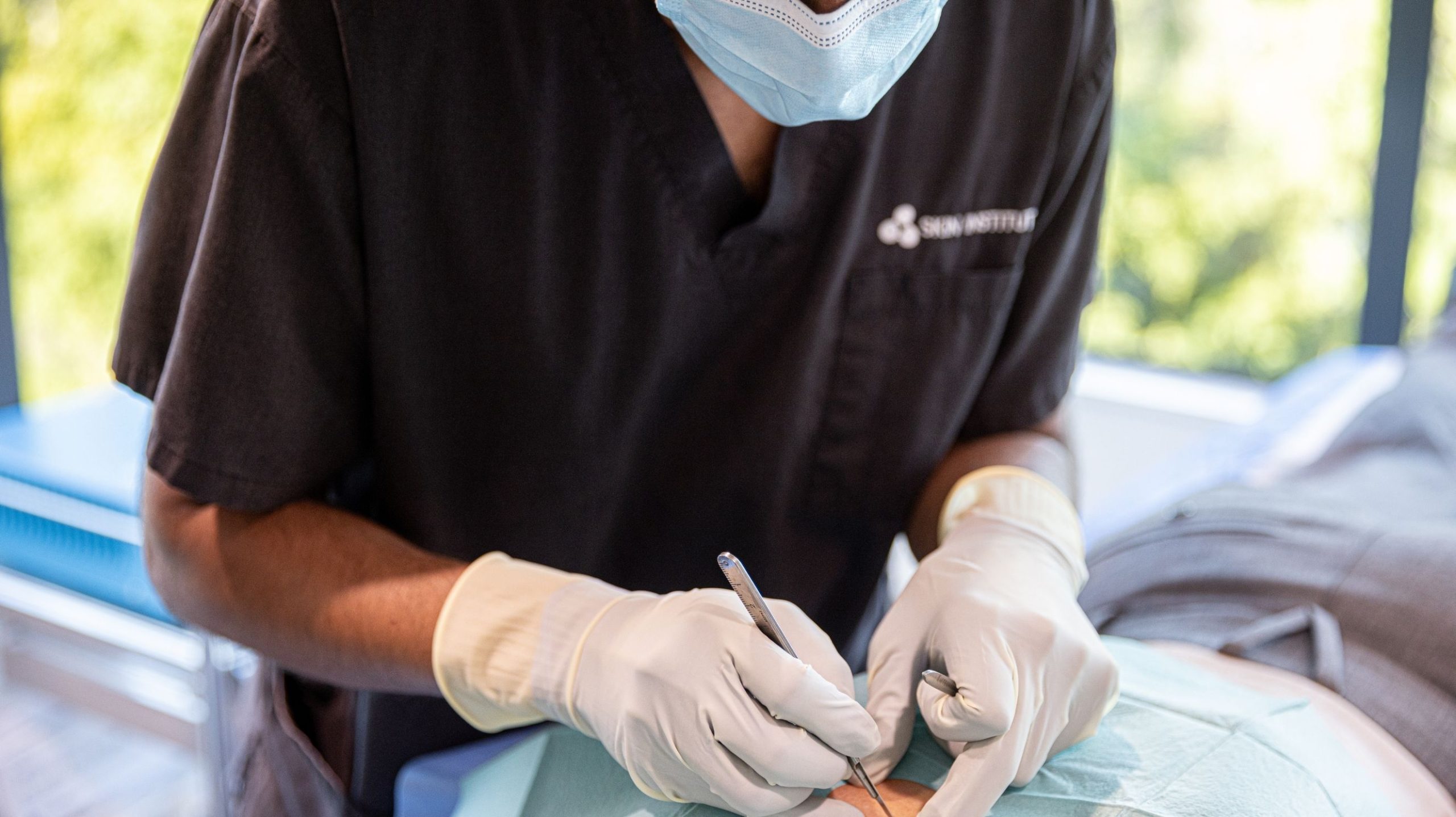
The doctor will clean the skin and inject local anaesthetic before removing the lesion, including all the skin tissue down to the fat layer. Everything that is removed is placed in a histology jar and sent for pathological analysis.
The wound will then be surgically closed, typically with two layers of stitches. A dressing will be applied afterwards.
Your doctor may use dissolvable (absorbable) or non-absorbable sutures. If the latter is used, these will be removed after five to seven days for facial procedures and one-two weeks for other areas.
You may also be given special dressings to help improve your scar. These are to be used for the first few weeks following your procedure – your doctor will discuss the specifics with you further.
Following a consultation at Skin Institute’s Auckland, Wellington or Queenstown clinics, you can select which laboratory you would like to have analyse your biopsy, giving you the option to receive your results much quicker. It’s as easy as choosing if you want to go private or public:
PRIVATE
Please note: the SkyLab laboratory fee is in addition to any other consultation or treatment charges.
PUBLIC
*In the rare event that the pathologist requires more detailed information on your biopsy or excision, we will let you know; and if this means the reporting time of your results increases to over 5 days in Auckland or 7 days in Wellington, we will waive your laboratory fee.
**If you are not a NZ Citizen, Permanent Resident, do not have a Resident Visa, or a Work Visa for 24 months or more, you will be charged for having your lesion/s processed by the local DHB laboratory.
To be quoted by provider