Topical skin medication is combined with a special light source in PDT, providing you with a thorough treatment for Actinic Keratoses (AK) and certain types of Basal Cell Carcinomas (BCC) and Squamous Cell Carcinomas (SCC) which more typically appear on the face and scalp, but can be treated anywhere on the body.
If surgical removal isn’t a feasible option for your case, PDT can be an ideal solution.
PDT involves applying a photosensitising cream to the treatment area. After an incubation period, the cream is activated by either a specialised light source or natural daylight. This causes abnormal cells to be destroyed while normal skin remains largely unaffected.
A solution or cream is applied to the skin and will be absorbed by the cancerous cells in the problem lesions.
The solution we more commonly use is amino levulinic acid (ALA) and this is for bigger treatment areas across the face and scalp. One of the creams that may be used for spot treatments, Metvix, contains methyl aminoleyulinate and this ingredient causes compounds called porphyrins to accumulate and be absorbed by the cancerous cells.
The porphyrins are light sensitive so when the cream is activated by the specialised light source, a chemical reaction is set off and the lesion is destroyed.
When you receive PDT, there are several things to be aware of before going in for the treatment:
PDT is recommended for:
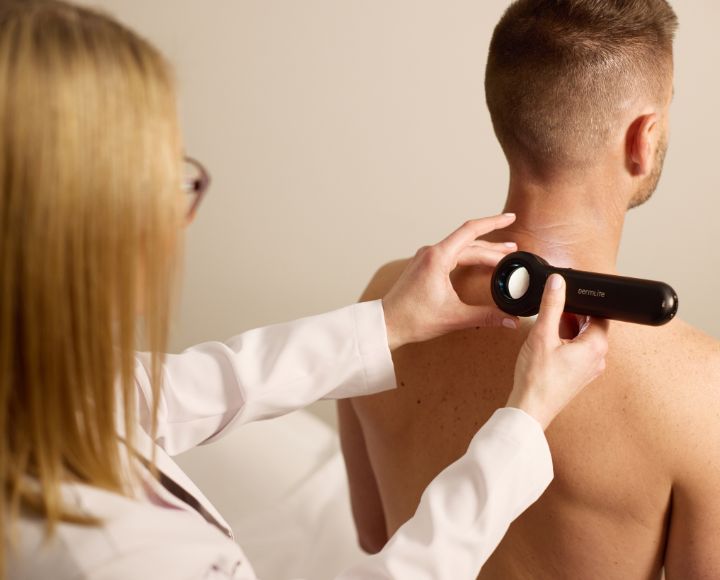
Your treatment will start off with a review of the skin site to be treated.
Any scaly lesions they will be removed before the solution is applied.
After application of the ALA, clingfilm is used to cover the solution to prevent evaporation and ensure good penetration.
You will then have one hour to wait, in a darkened room, which is provided for your comfort at our clinic.
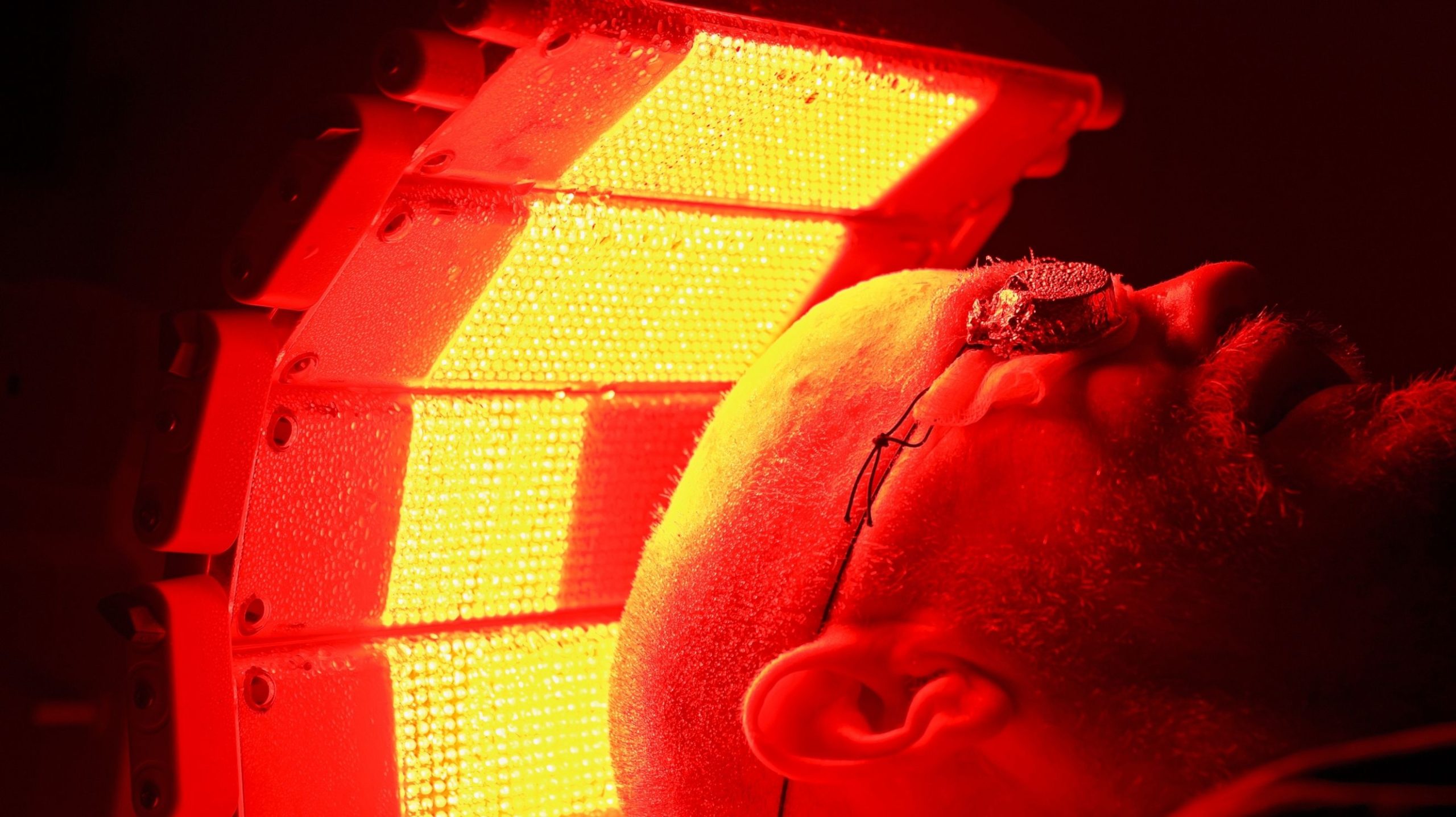
After 1 hour the solution is washed off and illuminated with a specialised red light. This exposure can last for anywhere between 8 and 30 minutes, depending on what your individual needs are.
You’ll need 1-3 sessions spaced 1 month apart. to make sure that the lesion is sufficiently destroyed, as well as a follow-up appointment with the doctor a few weeks or months after the last treatment.
Your treatment will start off with a 15-minute appointment to apply the cream to the necessary lesions, which will then be covered with a flesh-coloured dressing.
You will then have three hours to wait while the cream is absorbed.
You can leave the clinic, but you need to ensure that your dressing stays in place.
Once you return to the clinic, the cream will be washed off, and immediately illuminated with a specialised red light. This exposure can last for anywhere between 8 and 20 minutes, depending on what your individual needs are.
You’ll need 2 treatment sessions spaced 7 days apart to make sure that the lesion is sufficiently destroyed, as well as a follow-up appointment with the doctor a few weeks or months after the last treatment.
The procedure can be uncomfortable, so two paracetamol tablets can be taken 60 minutes before the treatment, and every 4–6 hours afterwards if required.
You’ll be given care instructions following the procedure, which may include prescription medication according to your needs. You need to ensure you apply sunscreen every day, regardless of whether it’s sunny – even in winter.
If you’ve been treated with ALA you will need 1 week off work. Metvix patients may or may not need time off work, and your practitioner will advise.
To be quoted by provider